Get expert advice about epoxy flooring in Fairfax, VA. Our epoxy flooring blog covers everything from costs and material comparisons to maintenance tips, local regulations, and project planning guides. Whether you are researching your first project or need maintenance advice for an existing one, our articles are written specifically for Fairfax area people. We cover local building codes, climate considerations, seasonal preparation, and how to choose the right professional for your epoxy flooring needs. Browse our 32 articles below or call (703) 423-0929 to speak with a matching specialist.
Compare your options: not sure how the treatments differ? Browse all comparison guides — get a free, no-obligation consultation. If you are here looking into epoxy floor contractor, the sections below walk through the process from the first quote to the finished job.
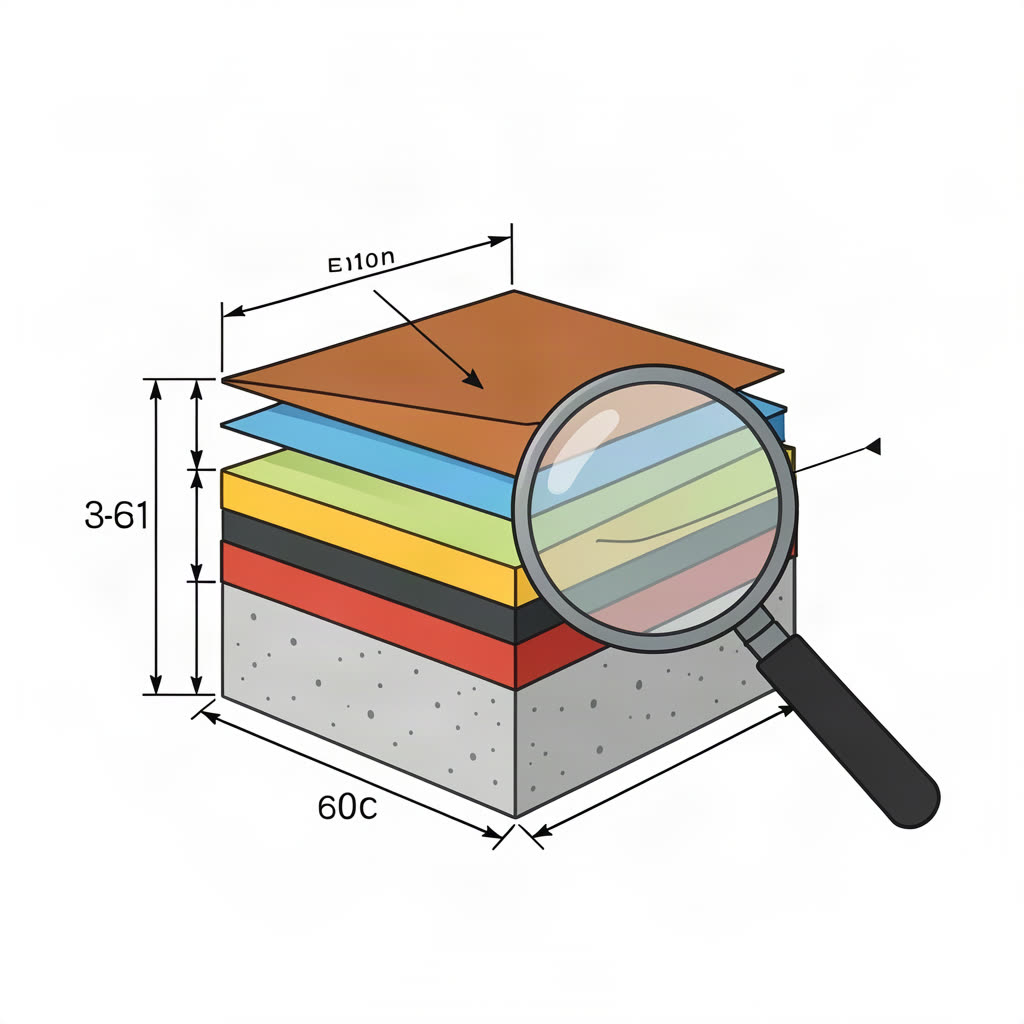
The Resinous Flooring Technical Blueprint
The Resinous Flooring Technical Blueprint -- expert epoxy flooring advice for Fairfax people.
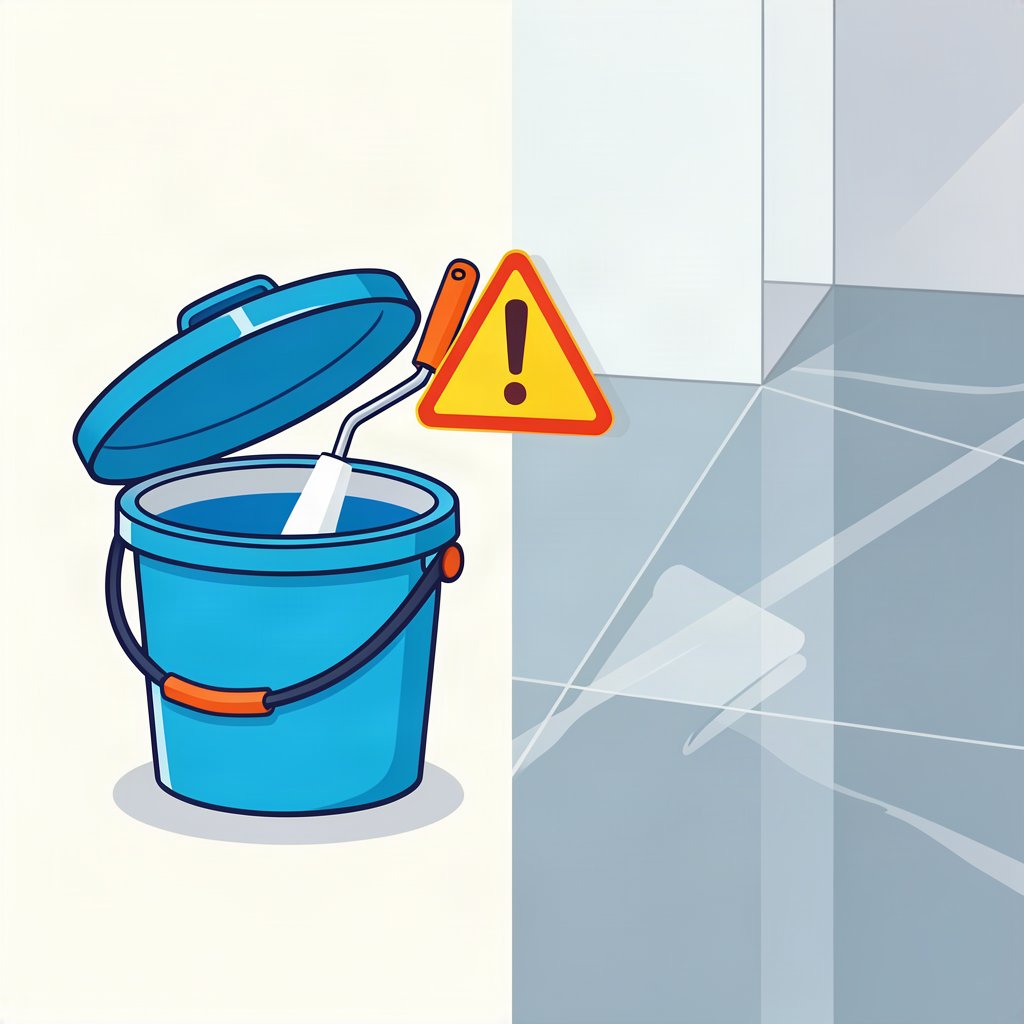
DIY vs Professional Epoxy: What the Kits Don't Tell You
DIY vs Professional Epoxy: What the Kits Don't Tell You -- expert epoxy flooring advice for Fairfax people.
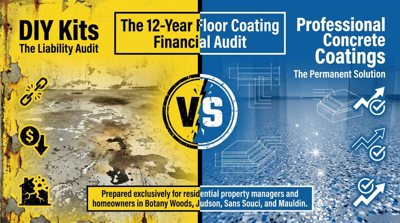
The 12-Year Floor Coating Audit: What Actually Happens to a DIY Kit in Northern Virginia
A 12-year cost and performance audit of DIY epoxy kits versus professional resinous systems in Northern Virginia: thickness, prep, hot-tire failure and total ownership cost.
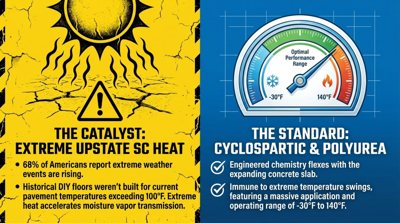
Why a Floor Coating Has to Survive -30°F to 140°F in Virginia
Northern Virginia swings from freezing winters to 100-degree pavement. Here is what an engineered coating has to flex through, and why rigid thin films fail first.
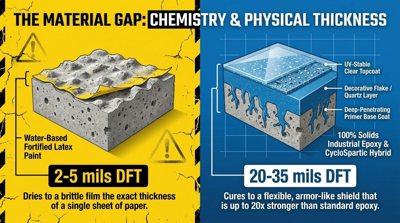
2-5 Mils vs 20-35 Mils: The Material Gap That Decides Floor Lifespan
Mils of dry film thickness and resin chemistry decide how long a garage floor lasts. A like-for-like comparison of retail kits against a 100% solids industrial build.
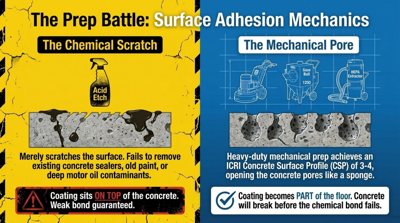
The Prep Battle: Acid Etch vs a CSP 3-4 Mechanical Profile
Acid etching scratches the surface; diamond grinding opens it. Why CSP 3-4 preparation is the difference between a coating that sits on concrete and one bonded to it.
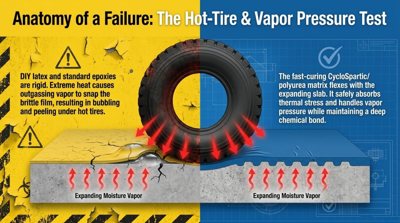
Anatomy of a Failure: Hot Tires, Vapour Pressure and Blistered Garage Floors
How heat, trapped moisture vapour and rigid DIY films combine to blister and peel a garage floor, and what a flexible polyaspartic system does differently.
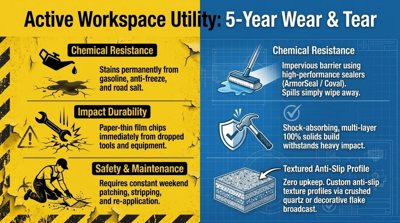
Five Years of Wear: What a Working Garage Does to a Coated Floor
Chemical resistance, impact durability and anti-slip performance after five years of daily use, compared between a thin retail film and a multi-layer 100% solids build.
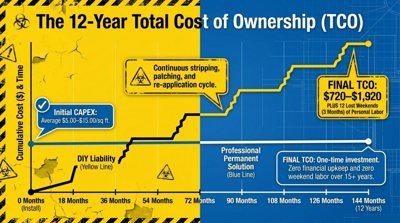
The 12-Year Total Cost of Ownership of a Garage Floor
Upfront price is the smallest number in a garage floor budget. The 12-year total cost of ownership, including recurring material and 12 lost weekends of labour.
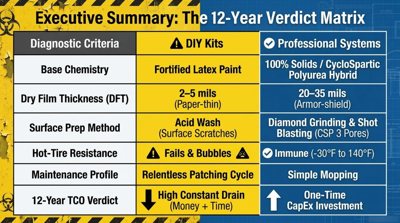
The Verdict Matrix: DIY Kits vs Professional Systems, Criterion by Criterion
Six criteria, two columns: base chemistry, dry film thickness, surface prep, hot-tire resistance, maintenance profile and 12-year cost of a DIY kit versus a professional system.
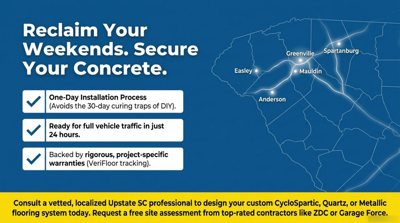
One-Day Installation: Avoiding the 30-Day Cure Trap
What a one-day installation actually means, how soon you can park on the floor, and why the concrete underneath keeps curing for a month after the coating is finished.
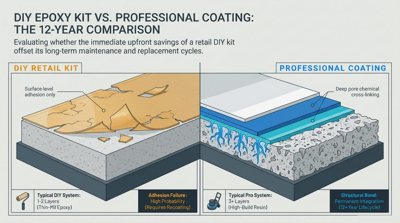
DIY Epoxy Kit vs Professional Coating: The 12-Year Comparison
One to two thin layers against three or more high-build layers: the adhesion, chemistry and lifecycle comparison between a retail kit and a professional coating.
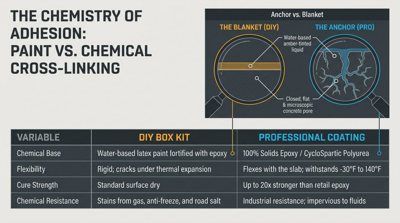
Anchor or Blanket? How Coating Adhesion Actually Works
Water-based latex paint versus 100% solids cross-linking: how a coating either blankets a closed pore or anchors into an opened one, and why it decides your floor's fate.
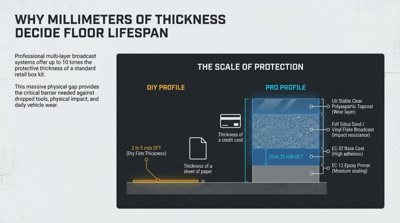
Why Millimetres of Thickness Decide How Long a Floor Lasts
A credit card against a sheet of paper: the thickness gap between a retail kit and a multi-layer broadcast system, and what each layer in the stack actually protects.
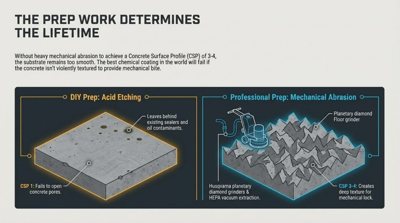
The Prep Work Determines the Lifetime
CSP 1 versus CSP 3-4: what acid etching leaves behind, what diamond grinding opens up, and why the best coating in the world fails on a smooth slab.
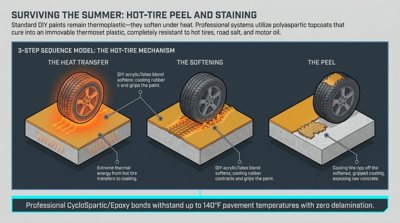
Surviving the Virginia Summer: Hot-Tire Peel and Staining
Thermoplastic films soften under hot tyres; thermoset systems do not. The three-step mechanism behind hot-tire peel and how the right topcoat stops it.
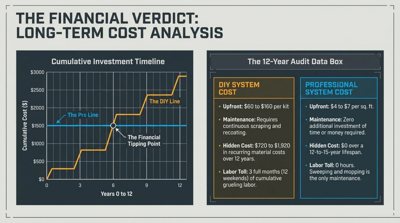
The Financial Verdict: DIY vs Professional Over 12 Years
Kit cost against installed cost, hidden recurring material, and the labour toll of 12 weekends. Where the cumulative-investment lines cross over 12 years.
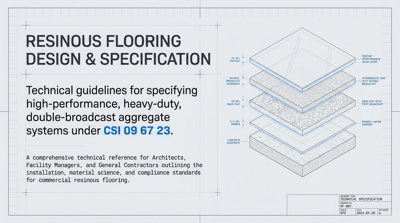
Specifying a Double-Broadcast Resinous Floor
How a heavy-duty double-broadcast system is assembled layer by layer, from penetrating primer to wear-layer topcoat, and what each coat contributes.
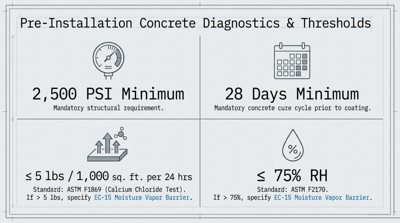
Pre-Installation Concrete Diagnostics: The Numbers That Matter
2,500 PSI, 28 days of cure, 5 lb per 1,000 sq ft per 24 hours and 75% RH: the pre-installation thresholds that decide whether a resinous floor can be specified at all.
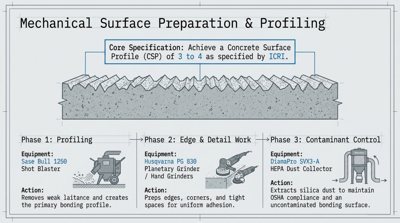
Mechanical Surface Preparation: Profiling, Edges and Contaminant Control
The three phases of mechanical prep: profiling to CSP 3-4, grinding edges and corners by hand, and HEPA contaminant control that keeps the bonding surface clean.
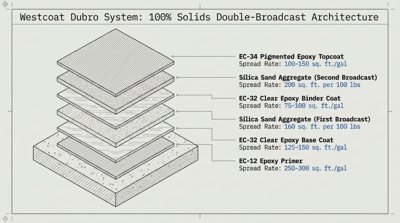
The Layer Build-Up: Spread Rates for Every Coat and Broadcast
Primer, base coat, binder coat, topcoat and two aggregate broadcasts, each with its own spread rate. How to convert those rates into the material a real floor needs.
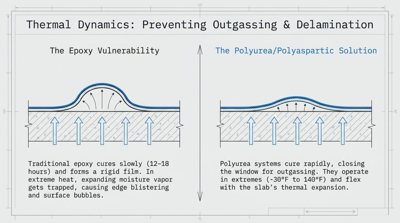
Thermal Dynamics: Stopping Outgassing and Delamination
Slow-curing rigid epoxy traps moisture vapour as the slab heats; fast-cure polyaspartic systems close the window. How outgassing blisters form and how to prevent them.
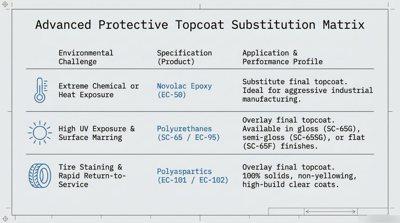
Topcoat Selection: Novolac, Polyurethane or Polyaspartic
Three final coats, three jobs: novolac for aggressive chemical and heat exposure, aliphatic polyurethane for UV and marring, polyaspartic for tyre staining and rapid return to service.
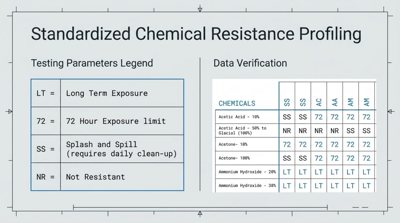
Chemical Resistance Profiling: How to Read the Ratings
Long-term exposure, 72-hour exposure, splash and spill, not resistant: how the standardised chemical resistance legend works, and what it means for your garage or shop.
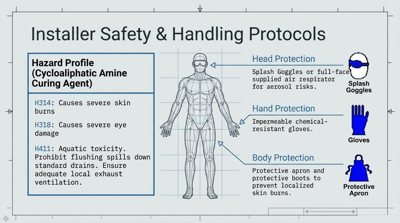
Installer Safety and Handling on a Resinous Flooring Job
The hazard profile behind epoxy curing agents, the PPE that actually protects, and the site rules that keep resin out of drains and crews out of the emergency room.
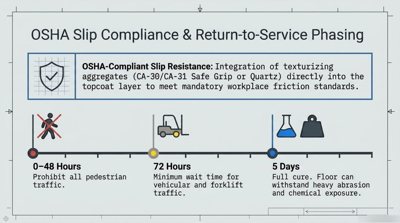
Slip Resistance and Return-to-Service Phasing
Anti-slip aggregate integrated into the topcoat, and the phased return to service: no pedestrian traffic for 48 hours, no vehicles for 72, full cure at five days.
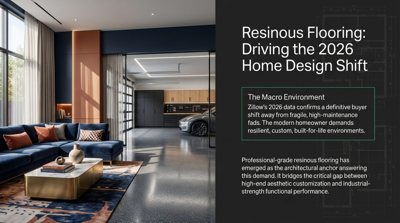
The 2026 Resinous Flooring Design Shift: From Single-Use Rooms to Activity Hubs
A full walkthrough of the 2026 resinous flooring specification: colour-drenching aesthetics, activity hubs, moisture mitigation, the 15-year lifecycle and chemical resilience.
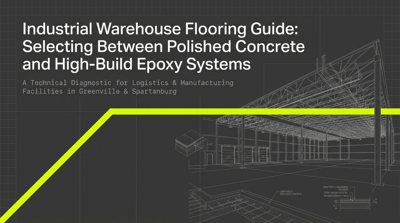
Industrial Flooring: Polished Concrete vs High-Build Epoxy
A technical diagnostic for warehouses, shops and manufacturing floors: polished concrete versus high-build epoxy on cost, impact, chemical resistance and downtime.
How Long Does Epoxy Garage Floor Coating Last?
The 10–20 Year Answer A properly installed epoxy floor system should last 10–20 years. But the key word is "properly" — and the difference between a floor that lasts two decades and one that peels in two years is almo...
Epoxy vs. Polyaspartic — Which Is Better for Northern Virginia Garages?
Two Materials, One System Northern Virginia's climate — hot, humid summers and freezing winters — affects which floor system works best. The short answer: the best floors use both epoxy and polyaspartic. Epoxy is the ...
How Much Does Epoxy Garage Floor Coating Cost in Northern Virginia?
Real Pricing for Real Projects Epoxy garage floor pricing in Northern Virginia varies with square footage, concrete condition, and the system you choose. A typical 2-car garage runs $1,500–$3,500 with full surface pre...
5 Signs Your Epoxy Garage Floor Needs to Be Replaced
Know When to Strip and Recoat Epoxy floors wear honestly — they tell you when they are failing. Here are the five warning signs that a floor needs to be stripped and recoated rather than patched. 1. Peeling or Delam...
Metallic Epoxy Flooring: The Complete Guide for Homeowners
A Floor Like No Other Metallic epoxy creates a stunning 3D liquid metal effect that is unlike any other floor. Pigmented metallic powders suspended in the epoxy are manipulated by hand as the coating cures, producing ...

How to Maintain Your Epoxy Garage Floor
Minutes a Week, Decades of Life Epoxy floors are low-maintenance — but there are a few things you should and should not do to keep yours looking new. The daily routine is simple: sweep or vacuum to remove grit and dus...
Have a question not covered here? Call (703) 423-0929 to speak with a epoxy flooring matching specialist — free, no obligation.